AVAILABLE FOR PRE-ORDEREstimated delivery by 18/12/2026.
ELECTRICAL FAULT FINDING MADE SIMPLE

BENE BOOKS

ELECTRICAL FAULT FINDING MADE SIMPLE

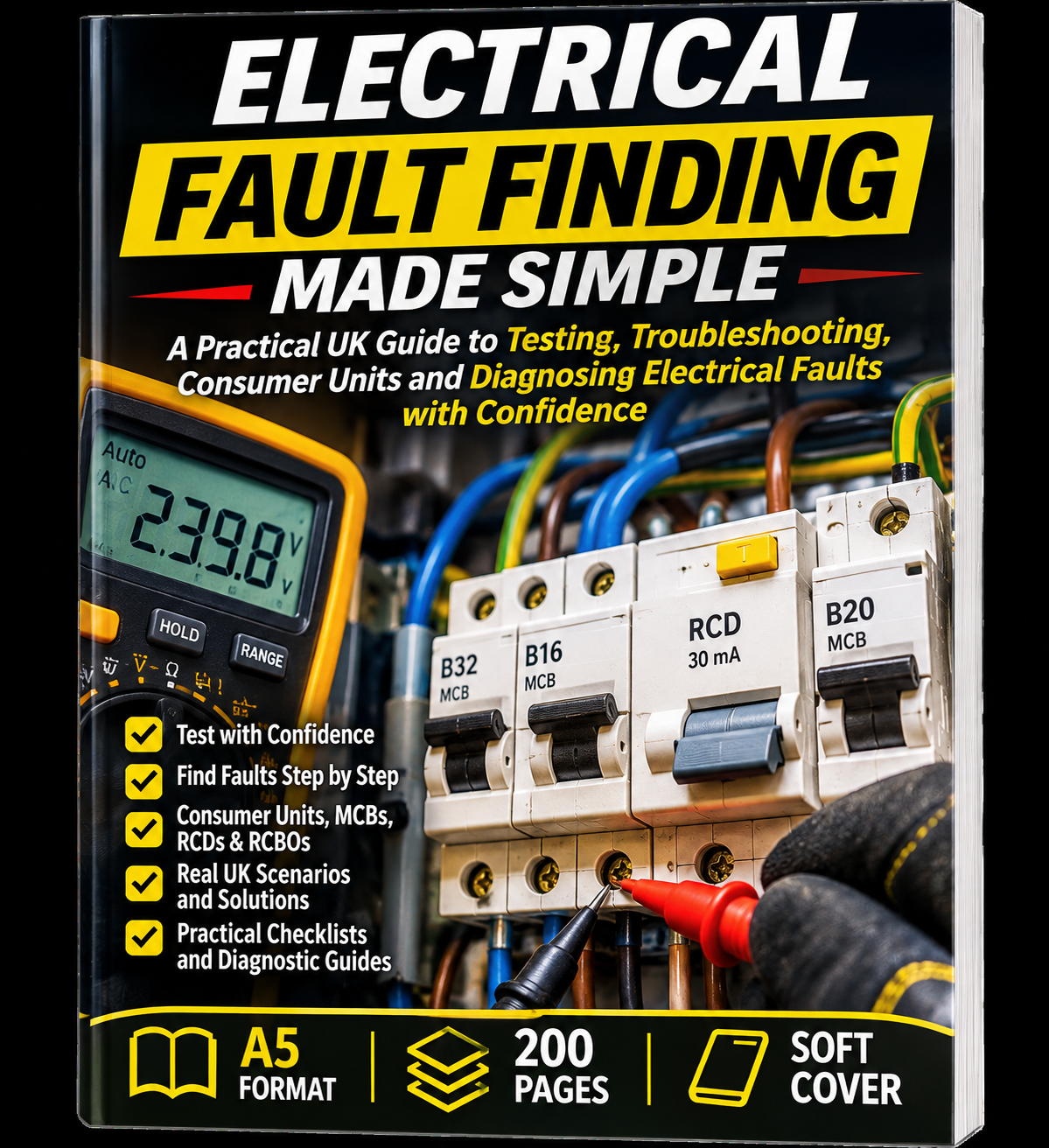
A Practical UK Guide to Testing, Troubleshooting, Consumer Units and Diagnosing Electrical Faults with Confidence

Electrical faults can be elusive, disruptive, and sometimes downright dangerous. "ELECTRICAL FAULT FINDING MADE SIMPLE" demystifies the art of diagnosis, equipping you with the practical skills needed to test, troubleshoot, and resolve issues confidently in UK electrical installations. From understanding consumer units and protective devices to tackling intermittent faults and interpreting test results, this guide blends clear explanations with real-world case studies. Whether you’re an apprentice or a seasoned electrician, you’ll find step-by-step advice grounded in the latest UK regulations, ensuring your approach is both safe and effective. Make guesswork a thing of the past and master the essentials of fault finding.
Price
£29.90
Pre-order

📦 Estimated delivery by 18/12/2026

Payment is taken when you order. Estimated delivery by 18/12/2026. Returns and refund policy.

Free delivery
Secure payment
Returns & refunds
Author Oliver Walker200 pagesPaperbackFormat A5English (UK)
Illustrative portrait

Reader feedback

“The fault-finding explanations are exactly what I wish I'd had when I started my electrical apprenticeship.”

WHAT YOU WILL LEARN

What you will gain from this book
How to approach fault finding as a logical, evidence-based process.
The operation and selection of key test instruments for UK installations.
Interpretation of test results and identification of warning signs in circuits.
Diagnosis of faults in ring finals, radials, lighting, and outdoor circuits.
Understanding of earthing systems, bonding, and the risks of open-circuit neutrals.
Best practice for reporting, certification, and communicating findings to customers.
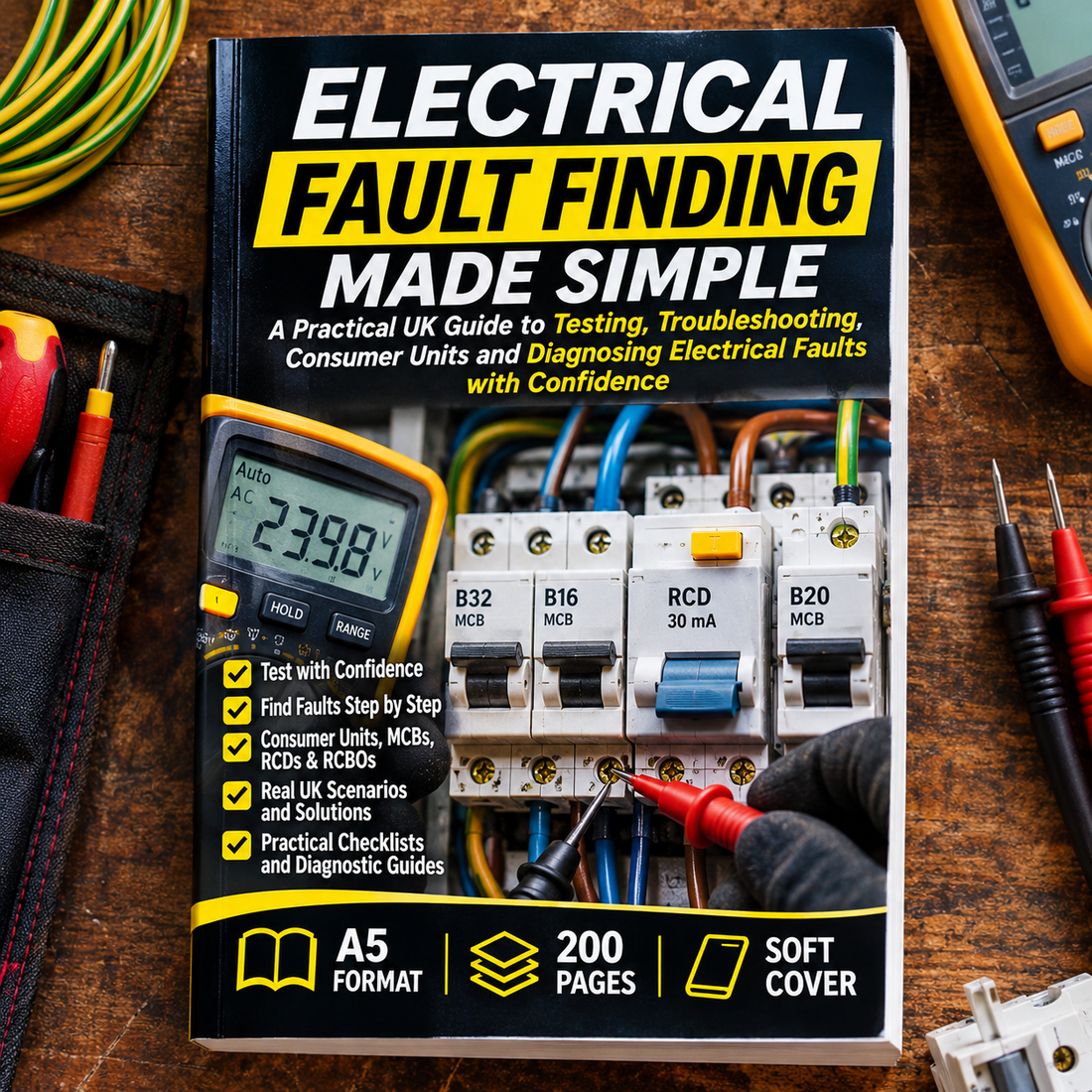
Close-up Product Photo

CONTENTS

Inside this book

PART ONE — THINK LIKE AN ELECTRICAL FAULT FINDER
1. Why Electrical Fault Finding Is a Skill, Not Guesswork
2. Understanding UK Electrical Installations and Supply Arrangements
3. Voltage, Current, Resistance and Impedance in Real Faults
4. Common Electrical Faults and Their Warning Signs
5. Building a Logical, Evidence-Based Diagnostic Process
6. Electrical Safety, Competence and Safe Isolation
PART TWO — TEST INSTRUMENTS AND MEASUREMENT SKILLS
7. Choosing and Understanding Electrical Test Instruments
8. Multimeters, Two-Pole Voltage Indicators and Proving Units
9. Continuity Testing and Interpreting Results
10. Insulation Resistance Testing: Principles and Limitations
11. Earth Fault Loop Impedance and Prospective Fault Current
12. Recording, Comparing and Questioning Test Results
PART THREE — CONSUMER UNITS AND PROTECTIVE DEVICES
13. Inside a Modern UK Consumer Unit
14. MCBs, Fuses, RCDs and RCBOs Explained
15. Understanding Nuisance Tripping and Intermittent Faults
16. Earth Leakage, Shared Neutrals and Neutral Faults
17. Overloads, Short Circuits and Earth Faults
18. Surge Protection, AFDDs and Modern Protective Equipment
PART FOUR — FAULTS IN DOMESTIC CIRCUITS
19. Ring Final Circuits: Common Problems and Diagnostic Clues
20. Radial Circuits, Socket Outlets and Connection Faults
21. Lighting Circuits, Switching Arrangements and LED Problems
22. High-Resistance Connections and Overheating
23. Outdoor Circuits, Moisture Ingress and Damaged Cables
24. Intermittent Faults: Finding Problems That Come and Go
PART FIVE — EARTHING, BONDING AND COMPLEX FAULTS
25. TN-S, TN-C-S and TT Earthing Arrangements
26. Protective Conductors and Main Protective Bonding
27. Earth Fault Paths and Automatic Disconnection of Supply
28. Open-Circuit Neutrals, Polarity Problems and Their Risks
29. Three-Phase Systems and Common Industrial Faults
30. Harmonics, Leakage Currents and Electronic Equipment
PART SIX — REAL-WORLD DIAGNOSTIC CASE STUDIES
31. Case Study: An RCD Trips Without an Obvious Cause
32. Case Study: A Socket Circuit with Intermittent Power
33. Case Study: A Lighting Circuit That Trips Under Load
34. Case Study: Unexpected Insulation Resistance Readings
35. Case Study: A High-Resistance Connection in a Consumer Unit
36. Case Study: Separating Appliance Faults from Wiring Faults
PART SEVEN — PROFESSIONAL TROUBLESHOOTING AND GOOD PRACTICE
37. Creating an Efficient Fault-Finding Workflow
38. Understanding Inspection, Testing and Certification
39. BS 7671, Guidance Note 3 and Relevant UK Requirements
40. Explaining Faults and Repair Options to Customers
41. Avoiding Misdiagnosis, Unnecessary Replacements and Repeat Visits
42. The Complete Electrical Fault-Finding Reference Checklist
FPV Experience

WHY READ THIS BOOK

Why read this book?

Many guides to electrical fault finding are either too technical or fail to address the realities of working in UK settings. This book bridges that gap, offering a logical, evidence-based approach to diagnosing faults, with a focus on practical application. Each chapter is designed to build your confidence, from understanding the principles of voltage, current, and impedance in real faults to mastering the use of test instruments and interpreting results. Up-to-date with BS 7671 and modern protective devices, the book also tackles the challenges of nuisance tripping, high-resistance connections, and complex earthing arrangements. Real-world case studies and a comprehensive reference checklist ensure you can apply your knowledge to everyday scenarios, avoiding common pitfalls and unnecessary replacements. It’s the essential companion for anyone seeking clarity and competence in electrical troubleshooting.

Who is this book for?

Electrical apprentices and trainees keen to develop practical troubleshooting skills.
Qualified electricians wishing to refresh or deepen their fault-finding expertise.
Maintenance technicians responsible for domestic, commercial, or industrial electrical systems.
Supervisors or managers overseeing electrical safety and compliance.
DIY enthusiasts seeking a clear understanding of fault diagnosis in the home.

FROM THE AUTHOR

A note from the author: Oliver Walker
This book was written to address the real frustrations faced by those working with UK electrical systems—whether you’re just starting out or have years of experience. The aim is to make fault finding accessible and systematic, demystifying both the theory and the practical steps. Every chapter is grounded in up-to-date standards and real-world practice, with clear language and practical case studies. My hope is that you’ll find the guidance here both useful and confidence-boosting, helping you to solve problems efficiently and safely. Thank you for choosing this guide as your companion in mastering electrical fault diagnosis.

Oliver Walker

Author Photo

Reader reviews

“The sections on RCDs, RCBOs and nuisance tripping make complicated subjects much easier to understand.”

“I particularly like the real-world fault scenarios. They help connect the theory to what happens on site.”

“The diagnostic checklists are a great way to learn how to approach faults systematically.”

“What stands out is the emphasis on understanding test results rather than simply replacing components.”

BEFORE YOU ORDER

Frequently asked questions

Does this book cover the latest UK Wiring Regulations (BS 7671)?

Yes, the book is aligned with the current BS 7671 requirements and references Guidance Note 3 where relevant.

Are there practical examples or just theory?

The book features numerous real-world case studies and practical diagnostic scenarios, not just theoretical explanations.

Will I learn how to use test instruments such as multimeters and insulation testers?

Absolutely. Dedicated chapters explain the selection, safe use, and interpretation of results for key test instruments.

Is this suitable for beginners or only experienced electricians?

It’s designed for both newcomers and seasoned professionals, with clear explanations and step-by-step processes.

Does it address nuisance tripping and intermittent faults?

Yes, specific chapters and case studies focus on nuisance tripping, intermittent faults, and their diagnosis.

Will I find guidance on safe isolation and safety procedures?

Yes, safety and competence are covered in detail, including step-by-step safe isolation procedures.

What format is the book?

Format A5, couverture souple (broché), 200 pages.

When will my pre-order arrive?

Delivery is expected by 18/12/2026. Payment is taken at the time of ordering.

Where can I find the returns policy?

Please see our refund and returns policy for the applicable terms.

BENE BOOKS

Discover this book

Master electrical fault finding—get your copy today and diagnose with confidence.

£29.90

Estimated delivery by 18/12/2026 · Paiement à la commande

£29.90